


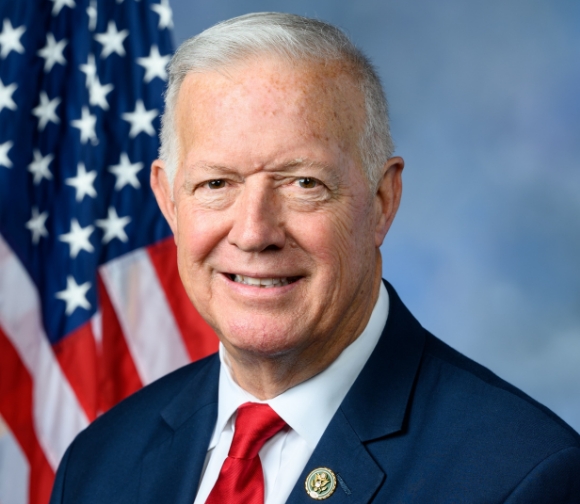
In this episode of the Pipeliners Podcast, host Russel Treat speaks with U.S. Representative Randy Weber of Texas about his background, the energy profile of his district, and his motivation for co-sponsoring the Next Generation Pipeline Research and Development Act. Their conversation explores the strategic importance of energy infrastructure on the Gulf Coast, the evolving needs of the pipeline industry, and how bipartisan efforts in Congress are addressing modernization, safety, and emerging energy technologies. This episode offers a unique window into the intersection of policy, infrastructure, and energy leadership from a Congressional perspective.
Next Generation Pipelines Research and Development Act Show Notes, Links, and Insider Terms
- Rep. Randy Weber – is an American businessman and politician who has represented Texas’s 14th congressional district in the United States House of Representatives since 2013. He was previously a member of the Texas House of Representatives, representing the 29th district.
- H.R.2613 – Next Generation Pipelines Research and Development Act – a bipartisan bill that aims to modernize the United States’ pipeline infrastructure by strengthening public-private partnerships and expanding federal research, development, and demonstration (RD&D) efforts. The legislation focuses on advancing next-generation pipeline materials, technologies, and safety systems to support a more resilient, efficient, and environmentally responsible energy transportation network.
- Keystone Pipeline (KXL) is a large-scale pipeline system designed to transfer oil from Canada to Texas. In June 2021, the Keystone XL Pipeline Project was terminated.
- PHMSA (Pipeline and Hazardous Materials Safety Administration) is responsible for providing pipeline safety oversight through regulatory rule-making, NTSB recommendations, and other important functions to protect people and the environment through the safe transportation of energy and other hazardous materials.
- NGL (Natural Gas Liquids) is natural gas that has been cooled down to liquid form for ease and safety of non-pressurized storage or transport.
- Department of Energy (DOE) is a cabinet-level agency of the federal government responsible for ensuring America’s security and prosperity by addressing its energy, environmental, and nuclear challenges through transformative science and technology solutions.
- API (American Petroleum Institute) is the only national trade association representing all facets of the oil and natural gas industry, which supports 10.3 million U.S. jobs and nearly 8 percent of the U.S. economy.
- FERC (Federal Energy Regulatory Commission) regulates, monitors, and investigates electricity, natural gas, hydropower, oil matters, natural gas pipelines, LNG terminals, hydroelectric dams, electric transmission, energy markets, and pricing.
- Liquefied Natural Gas (LNG) is natural gas that has been cooled to a liquid state (liquefied), at about -260° Fahrenheit, for shipping and storage. The volume of natural gas in its liquid state is about 600 times smaller than its volume in its gaseous state in a natural gas pipeline.
- Bitumen: A dense, heavy form of crude oil extracted from oil sands, particularly in Canada. It requires specialized refining and is more difficult to process than lighter crude.
- Refining Capacity: The total ability of refineries in a region to process crude oil into usable petroleum products. The Gulf Coast’s infrastructure is tailored for heavy crude, not light.
- Petrochemical Processing: The industrial process of converting petroleum or natural gas into chemical products like plastics, fertilizers, and synthetic materials, many of which originate from byproducts of heavy crude oil.
- Strategic Petroleum Reserve (SPR): A U.S. government-owned stockpile of crude oil used as an emergency supply during supply disruptions. 60% of it is located in Rep. Weber’s district.
- Winter Storm Uri: A 2021 extreme weather event that severely impacted Texas’s power and natural gas infrastructure, exposing weaknesses in the energy grid and prompting calls for modernization and increased reliability.
- Carbon Capture and Sequestration (CCS): A process for capturing carbon dioxide emissions from sources like power plants and storing them underground to prevent release into the atmosphere. Port Arthur, Texas, hosts the largest CCS facility in the U.S.
- CO₂ Pipelines: Specialized pipelines designed to transport captured carbon dioxide, often for storage or reuse.
- Fracking: Short for “hydraulic fracturing,” a method of extracting oil or gas by injecting high-pressure fluid into underground rock formations to release hydrocarbons.
- Cracking: A refinery process where complex hydrocarbons are broken down into simpler, more valuable components such as gasoline, diesel, and petrochemicals.
- National Institute of Standards and Technology (NIST): A federal agency that develops standards and measurement science, often involved in setting guidelines for new technologies in energy and infrastructure.
- Memorandum of Understanding (MOU): A formal agreement between organizations (in this context, DOE, DOT, and NIST) to collaborate on research, development, and implementation of new pipeline technologies.
- Energy and Commerce Committee (E&C): A powerful House committee that oversees national energy policy, including pipeline safety, energy infrastructure, and modernization efforts. Rep. Weber serves as Vice Chair of a subcommittee within this body.
- Science, Space, and Technology Committee: A U.S. House committee that addresses federal scientific research and innovation, including energy technology, where Rep. Weber chairs the Subcommittee on Energy.
- Grid Infrastructure: The interconnected system of power generation, transmission, and distribution across the U.S. The discussion emphasizes the aging nature of this infrastructure and the need for modernization, especially after events like Winter Storm Uri.
Next Generation Pipelines Research and Development Act Full Episode Transcript
Russel Treat: Representative Weber, welcome to the “Pipeliners Podcast.”
Rep. Randy Weber: Thank you, Russel. Pleasure to be here.
Russel: I’m really glad to have you. I appreciate you taking the time to come talk to us. I want to give a shout-out to your staff for setting this up. I know you’re working on a pipeline bill, but before we get into talking about that, I thought maybe you’d tell us a little bit about yourself and how you found yourself becoming a member of Congress.
Rep. Weber: That’s an interesting story. Look, I’ve grown up in a 20-mile radius on the Gulf Coast of Texas. Lived actually just north of Pearland, about half a mile. My dad had an Amoco gas station, by the way, on Telephone Road, south of Hobby Airport.
We moved into Pearland in ’72. I graduated from high school ’71. Course I got married in ’76, my beautiful bride of almost 49 years. We’ve got three kids, eight grandkids, and two great-granddaughters. We’ve been, it’s kind of the salt of the earth if you consider us as a family, right there in the southeast Texas.
I started an air conditioning company. My parents had an RV dealership and I didn’t want to work for them forever. I had a degree from University of Houston in business and decided…Well, here’s the fact all your listeners will probably love.
Brenda Gail and I were going to wait five years to have kids. We got married in ’76, and I was going to go to law school, and she was going to support me while I went to law school. We were going to wait five years to have kids.
We were married 11 months, three weeks, and one day, and Ms. Kristen Nicole appeared. [laughs] We’d tell everybody all three of our kids were planned, but only two were scheduled.
I couldn’t go to law school. I had to keep working. I started an air conditioning company, built it from scratch. I’ve driven all over, basically, Brazoria County, Galveston County in the southern part of Harris County. Just a working guy.
I started as a one-man outfit. Then I hired another guy, another guy, another guy. I never had more than 10 working at the company at one time, but so familiar with the area. I served six years on Pearland City Council. Actually, I got involved in politics when Reagan ran for reelection in ’83 because he believed in America.
He believed in American exceptionalism, but here’s one thing else — and he believed in individual freedom, Russell — but here’s what people forget, he also believed in individual responsibility. Sometimes people want the freedom. They’re just not sure they want the responsibility that comes with that.
Russel: That’s the difference between freedom and liberty. Freedom is whatever I want to do. Liberty is I get to live in the consequences.
Rep. Weber: Yes, it’s exactly right. I became very active in Brazoria County — Republican precinct chair, election clerk, election judge.
I said I was going to work for him in ’83 when he ran for re-election. I knocked on doors for him and a guy by the name of Tom DeLay running for Congress back in ’84. In fact, I talked to Tom day before yesterday. I’ve been paying attention a long time.
I was city council six years, and then I ran for the state legislature in 2008. Actually, I ran in 2007, spent $70,000 of my own money, and lost.
Russel: Yikes.
Rep. Weber: Then, the Speaker’s Office called me. They said, “The guy that beat you can’t run again. He’s gotten into issues up here. We want you to run, Randy.” I went, “Oh, my gosh. I can’t spend that kind of money [indecipherable 3:41] . I’m self-employed. That’s part of my retirement.”
They said, “What if we get behind you and raise the funds?” I said, “Well, if y’all are…” My wife and I prayed it through. If they raised the funds, we would run, which we did. We were crazy enough to run, and there were enough crazy people to vote for me and give me that job.
I was in the Texas Legislature 2009 to 2012. We got a call that Ron Paul was retiring, and people started telling me, “Randy, you need to run for Ron Paul’s seat.” I said, “For Congress? Do I look stupid?” Don’t answer that.
[laughter]
Russel: Right.
Rep. Weber: Here was my George H. W. Bush moment, Russel. I said, “Read my lips. I’m not running for Congress.” [laughs] Famous lost words. We, Brenda and I, prayed about it and said, “We think this is God’s next step,” so we ran and we won.
Our district goes all the way from the Louisiana line, Jefferson County and Orange County — we picked up in the last redistricting — and then almost all of Jefferson County, all of Galveston County, the southern half of Brazoria County.
Russel, we have seven ports in our district, more than any other member of Congress. Some have four. District 14 has seven. We produce 65 percent of the nation’s jet fuel, 80 percent of the nation’s military-grade fuel. 60 percent of the Strategic Petroleum Reserve is in our district.
Those seven ports don’t include the Port of Houston. Port of Houston is north of Galveston, about 42 or -3 or -4 miles.
If you jump up and get the Port of Houston, which actually is Silvia Garcia and Brian Babin, then it’s 80 percent of the nation’s jet fuel, still only 80 percent of the nation’s military grade fuel, 20 percent of the gasoline east of the Rockies. It is an energy for…and we have three LNG plants. Energy for us is a huge, huge deal.
Here’s something we’re proud of. Most people do not know, the Port of Beaumont moves more military personnel and equipment out of the country than any other port. You don’t think with that we’re patriotic? Boy, I’ll tell you what, my District 14 has more concealed handgun licenses than any other district in Congress.
[laughter]
Russel: I don’t find that hard to believe. It’s interesting as you tell your story. I got out of the military in 1985. One of the things I did is I started getting involved in Republican politics. I was a precinct chair in one of the districts in Mickey Leland’s district in the Montrose for a number of years.
Rep. Weber: Wow.
Russel: And I worked on Bush Sr.’s campaign, his first campaign. I blame myself for him not winning the second time because by that time I got busy working and wasn’t able to volunteer the kind of time on his campaign. Certainly, we’ve swum in some of the same waters, that’s for sure.
Rep. Weber: You bet.
Russel: You talked a little bit about your district. I think it’s pretty compelling. Just the amount of energy infrastructure that’s in that district, it’s compelling. Is that how you got involved or interested in pipelining? Is that how that came about?
Rep. Weber: Well, yes and no. I’ll do it this way. The Keystone pipeline, I was going into the Texas legislature actually in 2008, 2009, when the discussion about the Keystone pipeline coming down from Canada — of course, down to us — would actually have come into Port Arthur, Texas. They were having that debate back and forth.
For those of your listeners who may not know, the Keystone pipeline would have carried 830,000 barrels of product a day. A day. I’ll never forget being in the Texas legislature, we were having that discussion. I think Obama ultimately wound up killing the permit his first term.
I was talking to another lady, a Democrat in the Texas legislature, and she was telling me, “Randy, you know that Key…” I was telling her how we needed that down in our part of Texas. She said, “Randy, you don’t understand, that’s that heavy bitumen crude oil from Canada. It’s really hard to refine that and make a profit, making any money on it.”
I won’t tell you who she was, but I told her, I said, “Well, you know what? I appreciate you looking out for the oil companies and I appreciate you looking out for the pipeliners and all that industry, but I think that if the CEOs, if the plant managers, if the bean counters, if they’ve looked at this and thought they could make money, I think they’ll be OK, but thank you for looking out for the oil companies.”
Of course, that was tongue in cheek because she hated…well, maybe even to this day hates fossil fuel.
Russel: A lot of people don’t know it, but the refining capacity on the Gulf Coast is really designed for that heavy crude. We don’t like the light stuff. That’s why we ship the light stuff to others.
Rep. Weber: That’s exactly correct.
Russel: We have a unique capacity for dealing with that really heavy crude. It’s one of the reasons you’ve got so much petrochemical processing, is because they’re able to get all the byproducts out of that heavy stuff.
Rep. Weber: That’s right. What people don’t know, too, Russel, is Hurricane Ike hit in 2008, September 13th, 2008, and the refineries in Texas city — that’s where Brenda’s dad worked — those refineries, it looked like Hurricane Ike was going to dead center the Galveston Ship Channel, Houston Ship Channel.
They all went on skeleton crew and they shut down for two or three days while Hurricane Ike made its mind up and did its thing. Actually, it veered a little bit to the east of us over Bolivar Peninsula, which is also in my district.
When I came up here to Congress, John Shimkus told me — he’s now retired from Congress — we were talking about the history of our district. He said, “Randy, when that happened and y’all’s refineries went on very low people working there in low number,” he said, “our gasoline went up 60 cents a gallon.” I’ve never forgot that.
People don’t realize the impact that those kinds of storms and things have on these refineries. I’ve been watching it for a long time. I’ve been learning about energy and refining, as you’re saying. I owned an air conditioning company, so we dealt a lot with people who were working folks just like me, just like you, and we’d have to make our hours fit around their schedule.
Here’s something else you don’t know about Randy Weber. In 1973 I went to work for Mundy Construction. I was fresh out of high school. I was about a year and a half out of high school. I guess late ’72 technically. I was fresh out of high school, and I went there to work as a welder’s helper. Mundy Construction at what was then called Upjohn Chemical Company.
I’ve been there where all the controls were pneumatic. I was a welder’s helper working in the maintenance division, so anything that went wrong, we were out there helping take care of it. I’ve watched this progression from there, going to state rep, where we got to view some things, and now Congress, where we’ve been able to go to some of these refineries.
The Texas Gulf Coast is the energy capital. I would posture this idea, not just of Texas, but of the whole country. Obviously, maybe as much as we’re exporting, we’ll eventually get to be where we’re the major player in the world.
Russel: I’d be interested in your opinion on this. We’re getting a little off in the weeds, but that’s fine because I like talking about this stuff.
I think one of the challenges we have in the Gulf Coast is a lot of that refining infrastructure is quite old. It needs to be modernized. A lot of that refining infrastructure is being sold or mothballed. That is not good for the long-term health of Texas or the country in my opinion.
Rep. Weber: You make the great point, exactly one of the points that I make when I speak to groups. Here’s the thing. Here’s a news flash. There’s people in the world that hate us. [laughs] News flash — people in the world that hate us. We better have the most dependable, affordable, reliable energy supply that we can have because one day we’re going to need it.
Our country needs to grow our GDP. We need to grow in everything that we’re doing. Yes, we need to grow our military. We need to make sure that we are preeminent when it comes to energy. A lot of that stuff has to be redone.
I’ll just make a little bit of a side note. It’s interesting to me, sadly, that we’re closing down…We’ve been having this discussion. I’m on the Energy and Commerce Committee. I’m the vice chair of a Subcommittee E&C. In the Science Committee, I am the chairman of the Subcommittee of Energy because everybody knows my energy background along with my district.
One of the things that’s happening is we’re closing down coal plants. We’re saying, “OK, we’re going to close them down.” Some of these crazy people think you have to shut all this stuff down that still have three, four, five years left in them, Russel. They could be producing energy, electricity.
Winter Storm Uri…You went through Winter Storm Uri in 2021, in February. We’re saying, “No, don’t do that. Let’s get our system built back up.” You get everything in place. Let’s get more nuclear. Let’s get more natural gas plants. Then if you want to close coal plants, knock your lights out. But let’s not shoot ourselves in the foot in the meantime.
Russel: I think you make some great points. I do. I think you make some great points. Let me pivot here a little bit. You’re a sponsor of H.R.2613, which is the Next Generation Pipeline bill. How did that come about and what’s the nature of the need for that kind of legislation?
Rep. Weber: Deborah Ross is our co-chair. She’s a Democrat from North…I think she’s from North Carolina, yeah, not South. The nature of that is, look, we recognize in the Science Committee that this is imperative, this is important.
I’ve been on the Science, Space, and Technology Committee my entire time in Congress. I started in 2013, so what am I, on my 12th year? Deborah Ross I think has been here two terms maybe.
We recognized, part of it had to do with…There’s been, believe it or not, I’ll give credit to some of my Democrat friends across the aisle because they recognize the need.
We were in North Carolina two or three years ago when there was a power station shot up by a guy that had a high-power rifle and he killed an energy grid, shut down homes and hospitals and all that stuff because he took out all the transformers.
We’re starting to get focused more on energy, power, electricity — that includes pipelines, natural gas, oil, you can go right down the list — because we realized that we’re a little behind the eight ball.
Deborah Ross and I got together and I said, “Look, I’m going to do this bill. Pipelines need modernizing.” I would say even all the grid does, too, but we’re focused on, obviously, pipelines, the Next Generation Pipeline bill.
She agreed to co-sponsor with me. We’ve been having that discussion back and forth. Staff went to work. We’ve got some great staff up here, and they crafted that bill. That’s exactly how it came about, because we recognized the need. There’s some things we have to change.
We have to have the DOE be our friends. We have to have things that we can do. You’re going to be dealing with hydrogen, CO2. It’s not just the old normal. When you and I grew up, basically it was oil or natural gas. It’s not just the two. It’s the new forms of fuel that we’re seeing, the ability to produce energy from a lot of this stuff that we never would have thought of 10, 15 years ago.
Russel: I’m a history buff. I like looking at history. Some of the history that I enjoy might be a little bit arcane, if you will, because I get into history of the railroads and how they got built, the history of World War II and how a lot of the pipeline infrastructure got built.
It’s very interesting that projects of scale, projects that are critical to the national health and the national security, generally have to come from Washington. They’re not organic. They don’t come from the states. They don’t come from the companies typically.
[crosstalk]
Russel: Knowing that there’s work being done about next generation pipelines and what we’re going to need as an infrastructure for the future, I take some solace from that.
I think it’s good in knowing that that’s sponsored by both a Republican and a Democrat. It gives me a little faith in government in a time that might be hard to have faith in government because we’re actually working on things that need to get done.
Rep. Weber: Absolutely. I’m like you, I’m a little bit of a history buff, too. Let me just be…I won’t say politically correct or incorrect, patriotic is probably the better word.
What I tell people, Russel, when I speak to crowds is, you and I grew up in a time where we knew what happened in World War II. You know this. Men and women — I mean men particularly, mainly — lied, young boys about their age, 15, 16 years old, to get in the military to go fight the vilest enemy the world had ever seen. The greatest generation. Remember, we call them the greatest generation.
Russel: Yeah, absolutely.
Rep. Weber: They fought the vilest enemy the world had ever seen. And many of them never came back. They paid what Lincoln called that full ultimate price. Then they came back maimed and disfiguring and all that, and they never complained. They simply came back here, Russell, and they built the greatest country the world had ever seen.
That’s the greatest generation. Now, the kids growing up, what I call the latest generation, are we teaching our kids, the latest generation, about the greatest generation, what they knew and understand that America was worth fighting for?
The values, the principles are what makes us the greatest country God’s ever given to man. Are we teaching the latest generation that? I’m afraid we’re not.
Russel: I think what you say is true.
Rep. Weber: Now, that’s the thing.
Russel: I do. I do think, though, that it’s very difficult in this day and age with social media and getting absolutely onslaughted with information, and never knowing what’s right and what’s not right.
It’s one of the things I try to do in this podcast is talk to real people in-depth about real things. That helps people understand what really goes on and what it takes to get things done.
Rep. Weber: Since we’ve got such that great country that God has seen fit to preserve, we need energy. We need pipelines. We need people who know how to make things work, who go out to work day in and day out, what I would call the salt of the earth. That’s exactly what pipeliners do. That’s why we’re so thrilled to be on this podcast with you.
Russel: Tell me if you could. What’s in the bill? What’s in the Next Generation Pipeline Bill? What are some of the elements?
Rep. Weber: Obviously, I talked earlier about the need for merging sources to be able to contain those CO2, hydrogen, others. Who knows what’s going to come up, choose, in six months or six years?
We have Department of Energy estimates that 96,000 miles of new pipeline will be needed to transport CO2, for example. You talked about CO2, carbon capture and sequestration.
A lot of people don’t know this Russell, but the largest CCS, carbon capture sequestration, storage facility in the United States is in Port Arthur, Texas, my district. You’re seeing pipelines needed for that. You’re seeing they’re so critical for a productive energy sector to move all kinds of raw material.
They take oil as, you know what fracking is. You know what cracking is. They take oil and they crack it in some of these refineries, and you know this, my gosh, it’s your watch, your iPhone, your glasses, stuff in your car, your dashboard, all the stuff that we wear and, and use every day. Oil is so frigging necessary.
The bill is set to make sure that federal research is increased. There will be strong industry collaboration, which mean we will lean heavily on the pipeline. I don’t want just a bunch of bureaucrats up here making decisions.
Bring in industry, bring in the guys and the gals that make this happen day in and day out, and let’s work together on it. Nobody knows that industry like y’all do. That’s what we want to do.
The other thing that we’re aiming on doing is to make sure that we establish a demonstration initiative at DOE to support low to mid-technology, readiness-level projects that will advance research by DOE, the Department of Energy, and PHMSA, you know what the Pipeline Hazard Material Safety Act is.
Working with PHMSA so that we can help lab scale, basic research, and the end run achieve commercial deployment. That’s our aim in a nutshell.
Russel: I think that’s admirable. My business, currently, we’ve been awarded a PHMSA R&D project.
We’re doing what we think is leading edge cutting research, combining gaming technology and artificial intelligence to build tools for training to improve safety, performance, and emergency response, and abnormal response, and that sort of thing. It’s the kind of thing that you’re doing with this bill that creates the dollars that supports that type of activity.
Rep. Weber: Exactly.
Russel: I’m a very small part of the entirety of what goes on in that world, but that one way that we’re trying to do something unique to improve safety.
Rep. Weber: I’m glad to hear you say that, but the fact that also you’re holding this podcast, where people can try to understand what’s going, there are some good things going on up here.
[laughter]
Russel: Yes.
Rep. Weber: Especially as it relates to pipelines.
The reason I say that is because the bill is going to require DOE, DOT, Department of Transportation, National Institute of Standards and Technology, NIST, to enter into a new memorandum of understanding, MOU, that will launch a joint pipeline research program.
We get those agencies collaborating again with experts from industry, the real men and women that actually have boots on the ground, they have this experience, then we will develop a national pipeline modernization center.
Once we get all that done, packaged, then we will be able to collaborate with industry, with stakeholders and federal agencies where we all work together so that we can commercialize innovative cost-effective pipeline technologies and practices. For me, my way of thinking, our way of thinking, it’s a win-win-win.
Russel: You use a word I want to unpack a little bit. Given the fact that you came up as a businessman, I think you’ll appreciate this. There’s a pretty big difference, if you will, between creating a technology and commercializing a technology.
Rep. Weber: Sure.
Russel: Commercializing a technology requires a lot of things beyond just the raw research. I got to create standards. I got to create practices. I got to create training. I got to help companies understand how to make any organizational or capability changes to apply that technology.
There’s a long road from “I have something new and interesting and of value” and it’s in the market actually delivering that value. Again, I’m trying to tee a question up here. I would say that the government historically has been pretty good at R&D and not that good at commercialization.
Rep. Weber: You know why that is? That’s because the agencies, because they can apply the new…You know this, with AI and with all this stuff that’s coming along, we’re able to do this stuff faster and faster and faster.
What we’re hoping under the current administration — and I’m a Republican — I want to make sure that we modernize not just the technology, but the ability to collaborate agencies and agencies with the private industry. We need that input. We need to get the permitting done.
I’ll say this, some of my friends across the aisle, the Democrats on the other side of the aisle, if you will, they’re finally coming to the idea that we’ve got to shut down…There’s no reason that permitting should take four or five, six years, for example, for a plant.
I’ve had people come into your office, Russel, up here. I know technically you don’t live in my district, so you can’t vote for me, at least legally.
[laughter]
Rep. Weber: I vote for you every day. I’ve had people come in this office up here in DC and say, “Randy, we can build an LNG plant in two and a half years, $6, $7, $8, $12 billion,” whatever — it depends on how big, how many trains it is — “but the permitting takes four or five years, sometimes longer.”
When you’re an investor, Russel, and you’re trying to invest your money, you get awful antsy if you don’t know if your investment’s going to even be there for you five or six years down the road. We’ve got to streamline permitting, and not just on fossil fuels. Obviously, we’re talking about nuclear, we’re talking about natural gas. You go right down the line.
I would say to you, back to your idea, that was getting these guys to work together sometimes can be a problem. We think they’re going to recognize there’s a new sheriff in town. There’s got to be a new process, a thought process. We’ve got to be better and quicker and faster.
China’s not our friend. I can go down the list and name the other countries. We’ve got to get this done quickly. That really is underlying, if that makes sense, our aim.
Russel: Yeah. I absolutely concur. Early on in my podcast, I’ve been doing this thing since 2017, I had somebody from the Corps of Engineers come in and talk about permitting. One of the comments he made, I had to process it a bit when he said it, but he says, “Our mission, our job is to permit, to allow, to enable. Our mission is not to hold up, slow down.” Right?
Rep. Weber: Right.
Russel: We’ve got to figure out how to make that happen. We’ve got to make those wheels turn more quickly, more efficiently. That’s a big part of all this.
Rep. Weber: We’ve got some bills going where, for example, an oil company can come in and pay a bigger permit fee up front, and then, permit will be done in a year or two, at the most. You can plan for that. You can make plans based on that. This five, six years or longer stuff, you can’t.
You know this, the crazy left, they’re going to try to file a lawsuit against anything that has to do with fossil fuel or anything like that nature, and probably nuclear, too. Thankfully, the crazy left is diminishing, in my opinion. Somewhat, they’re beginning to come around on fossil fuel and pipelines and even nuclear.
Russel: What can the working pipeliner do to support getting this bill done?
Rep. Weber: Talk to everybody they know that has a representative that would be affected by this.
Talk to Deborah Ross. Call her office. Call Randy Weber’s office. Call their senator. Call their member of Congress and say, “Look, you need to be on this bill. With all the AI and the energy centers that are coming, we’ve got to get more energy. All this stuff needs to happen and needs to happen yesterday.”
Talk to their representative, write those letters, make those emails, and make sure that they get in touch with our elected representative so they can see that people, they want this. This is important.
Russel: For the listeners, what we’ll do here in the show notes for this episode is we’ll include some resources where you can go to contact your representative, and such. I do think this bill’s really important for the pipeline industry.
I know that there’ve been a number of people I had this conversation with — Skip Elliott, a former executive director of PHMSA — about the need for a pipeline center. There’s work that needs to be done, that needs to be done at scale, that has to be done as a federal project. That can’t be done by industry. It’s too large.
Rep. Weber: You’re right.
Russel: It’s too important, frankly. It needs to happen.
Rep. Weber: Nationwide, and it is our energy. We need that energy. Listen, I’ve got a committee hearing coming up in seven minutes.
Russel: I was about to say thank you very much for being here. I appreciate your time. Great conversation, and keep doing the good work. We thank you for your time, Representative Weber.
Rep. Weber: You, too. We appreciate what y’all are doing. Y’all make America great. Thanks again.